Celia de Villiers
Artist, educator, curator & researcher · Co-Director, Ponte d’Arte
Saudade Bahia 2004
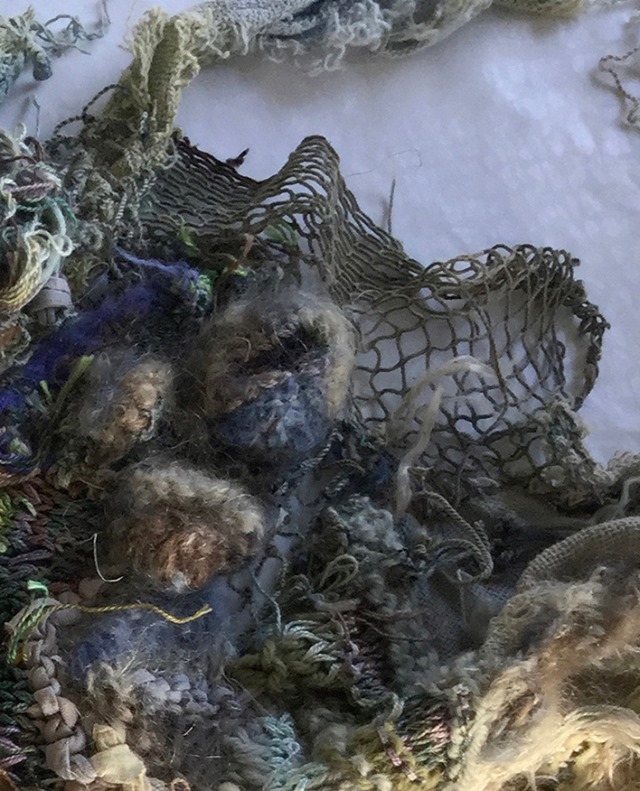 Image to come(Missing info)
The fishing net — a symbol of extracting the unconscious elements from deep-lying sources, and finding the elusive treasure or wisdom.J. E. Cirlot, A Dictionary of Symbols
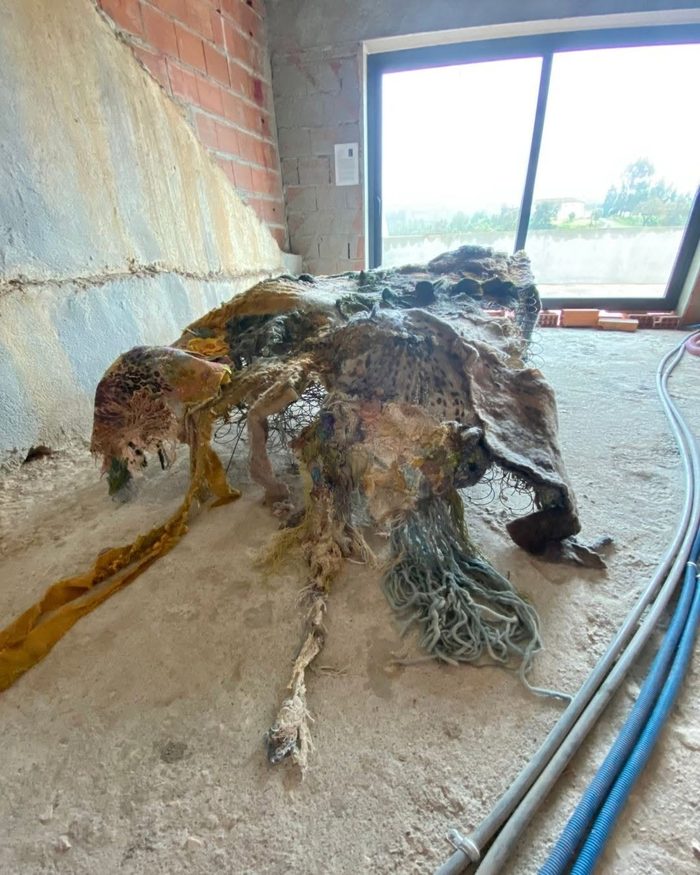
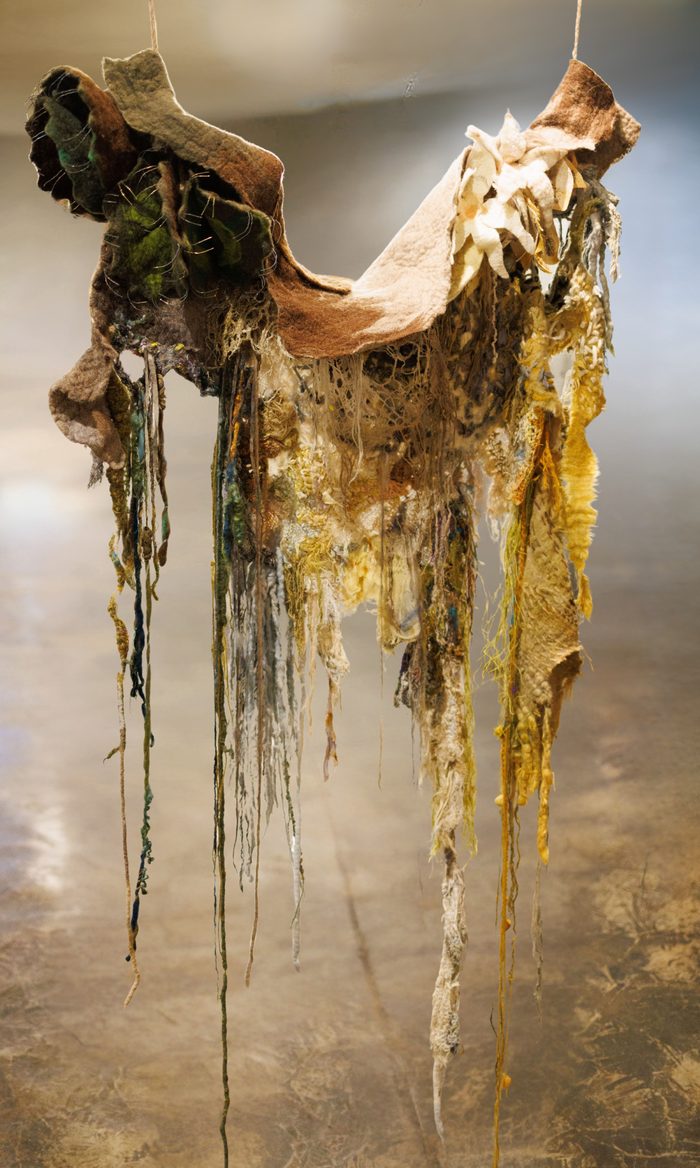
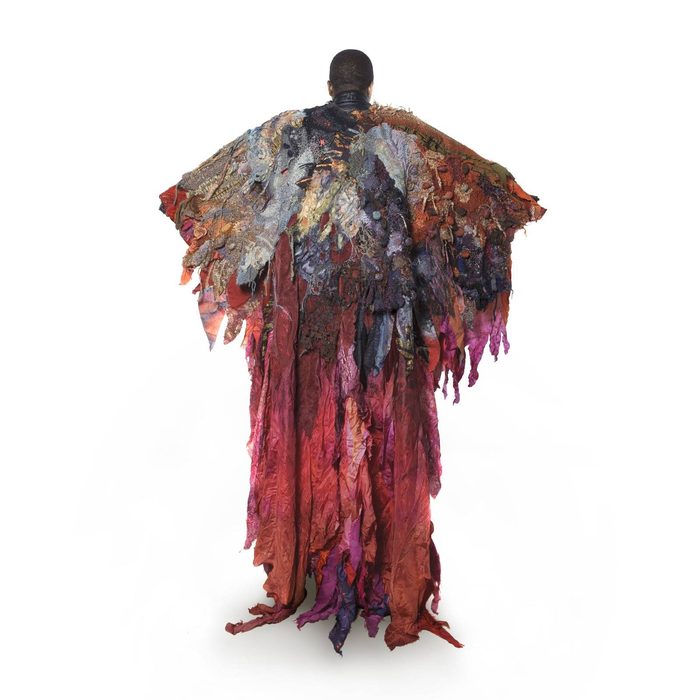
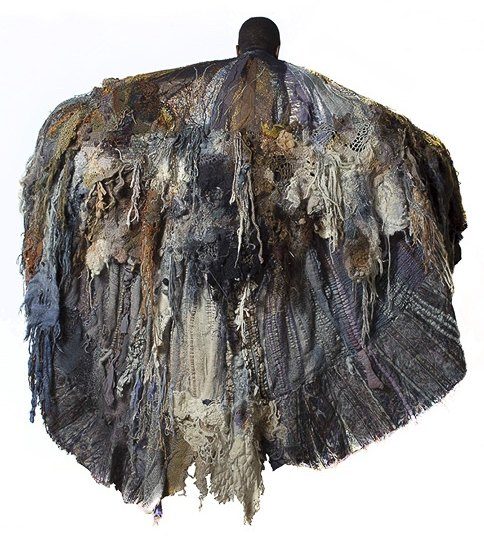
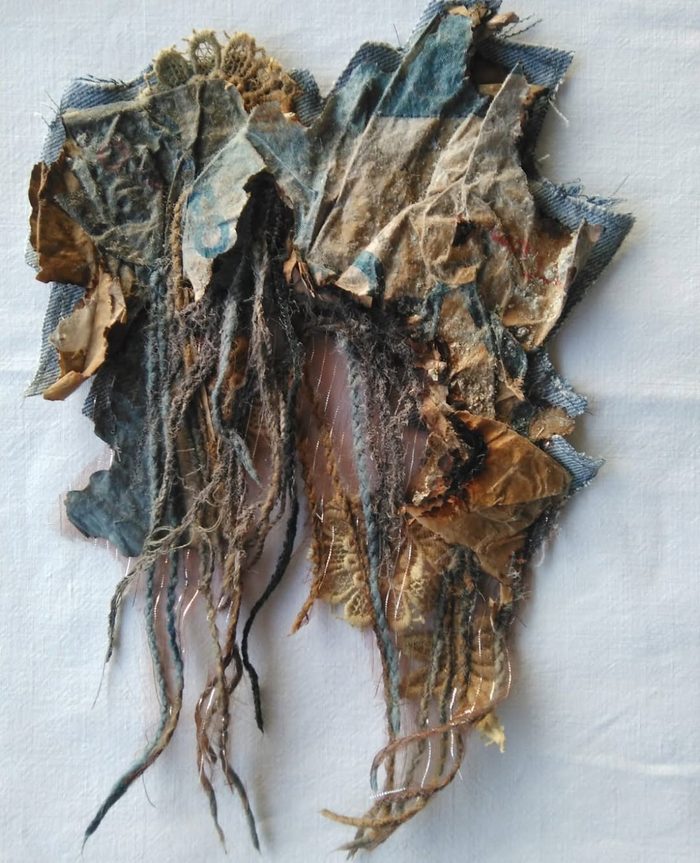
Made during a fellowship at the Sacatar Foundation on the island of Itaparica, reached by ferry from Salvador in Bahia, Brazil. “There I learned that if one enjoys life, art will happen.” Following fellow residents’ advice to relax rather than obsess over a work for the exhibition, de Villiers walked the beaches and gathered jetsam and flotsam — hand-knotted fishing nets, seaweed, jute, weathered synthetics and washed-up textiles — intuitively weaving, knitting, crocheting and stitching them into a cloth with no end in mind, over-dyeing the salvaged fabrics and blending them with her darker threads.
She was making a net of dense and fragile areas — “making whole what had been damaged and fragmented by rough seas.” Only later, back in her studio, did she read in the symbologist Juan Eduardo Cirlot’s A Dictionary of Symbols that the fishing net is a “symbol of extracting the unconscious elements from deep-lying sources and finding the elusive treasure or wisdom.” The making was a subconscious, meditative process.
A month into the residency, on a morning walk, she found a barnacle-covered sewing machine lying between the rocks — “a gift from the sea,” and the perfect object for the final presentation. Such serendipity, she writes, is a once-in-a-lifetime experience; she carried the machine home to South Africa, to the annoyance of the air crew and customs at São Paulo and Johannesburg.
Saudade Bahia means longing for the province of Bahia — the place where she could clear the cobwebs in her head, make life-changing decisions and re-invent her future. The work was shown alongside fellow residents at the Catharino Henriqueta Museum of Textiles and Costume in Salvador.